Hope Shamba Farm
Help grow a more resilient future. A model farm in Empukani built around growing food, creating opportunity, and teaching families skills they can use themselves.
The problem
When the cattle die, everything dies with them.
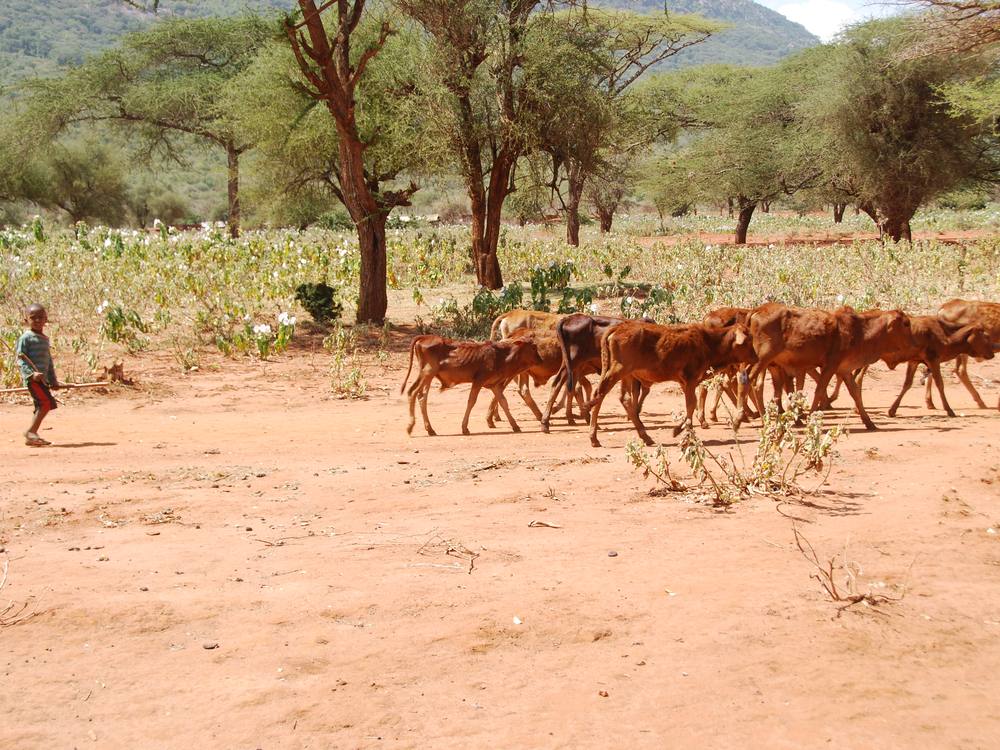
When drought destroys livestock, a Maasai family can lose both its income and its food in the same season. The herd is the bank, the pantry and the pension all at once.
In the three decades we have worked in Kenya, repeated droughts have left the over-grazed land around Empukani so depleted that the herds cannot survive them. In the most recent drought it is estimated that 80% of the herds died of starvation. A family that loses its cattle loses its income and its food supply in the same season, and has no way to buy its way out.
Sole dependence on one asset, in a place where that asset periodically dies, is the underlying problem. Food relief answers the emergency. It does not answer the pattern.
Hope Shamba is another path. Not a replacement for the herd, but a second source of food and income that a drought cannot kill off in one season.
None of which is a comment on the people. Surviving in this country for thousands of years takes more skill than most of us will ever need. What a herding economy cannot produce is surplus: the spare capital to fence land, sink a well and wait out a first season while a new way of farming is learned. That is the part we can supply.
The vision
Diversification, taught rather than donated.
To learn and teach farming techniques that are highly productive and water efficient in the harsh southern Kenya climate, providing food, jobs, and the revenue to replicate the farm in gardens all over the area.
The aim is a realistic alternative to sole dependence on cattle and goats, so that the Maasai community can thrive through periodic droughts rather than merely survive them. Food grown here is sold, and the proceeds reinvested into multiplying gardens across the area.
And because everyone needs to eat, the farm reaches Maasai families who would never walk into one of our churches.
Provide
Food for the people of Empukani.
Teach
Skills in sustainable farming, passed to the next generation.
Protect
Families, by storing up resources ahead of the drought.
Demonstrate
The love of Jesus, outside the walls of a church.
What's built
The hard part is finished.
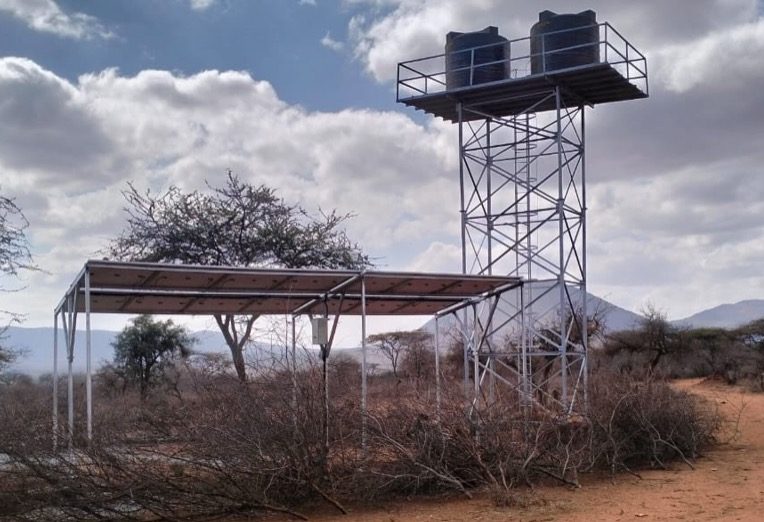
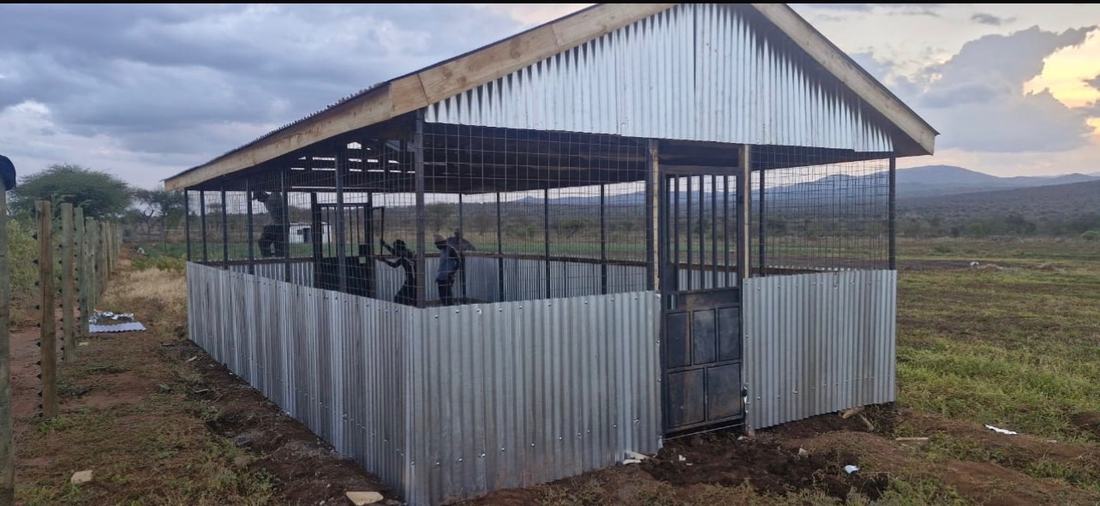
The farm is already equipped with the well, solar water system, tanks and fencing needed to grow in a challenging environment, and the seed room is going up now. Everything that had to exist before a single seed could go in the ground is in place.
- Water
- A 290-metre borehole serving the farm, with a 24-foot tower and two holding tanks
- Power
- A solar array sized to run the well outright, no diesel, no fuel bill
- Fencing
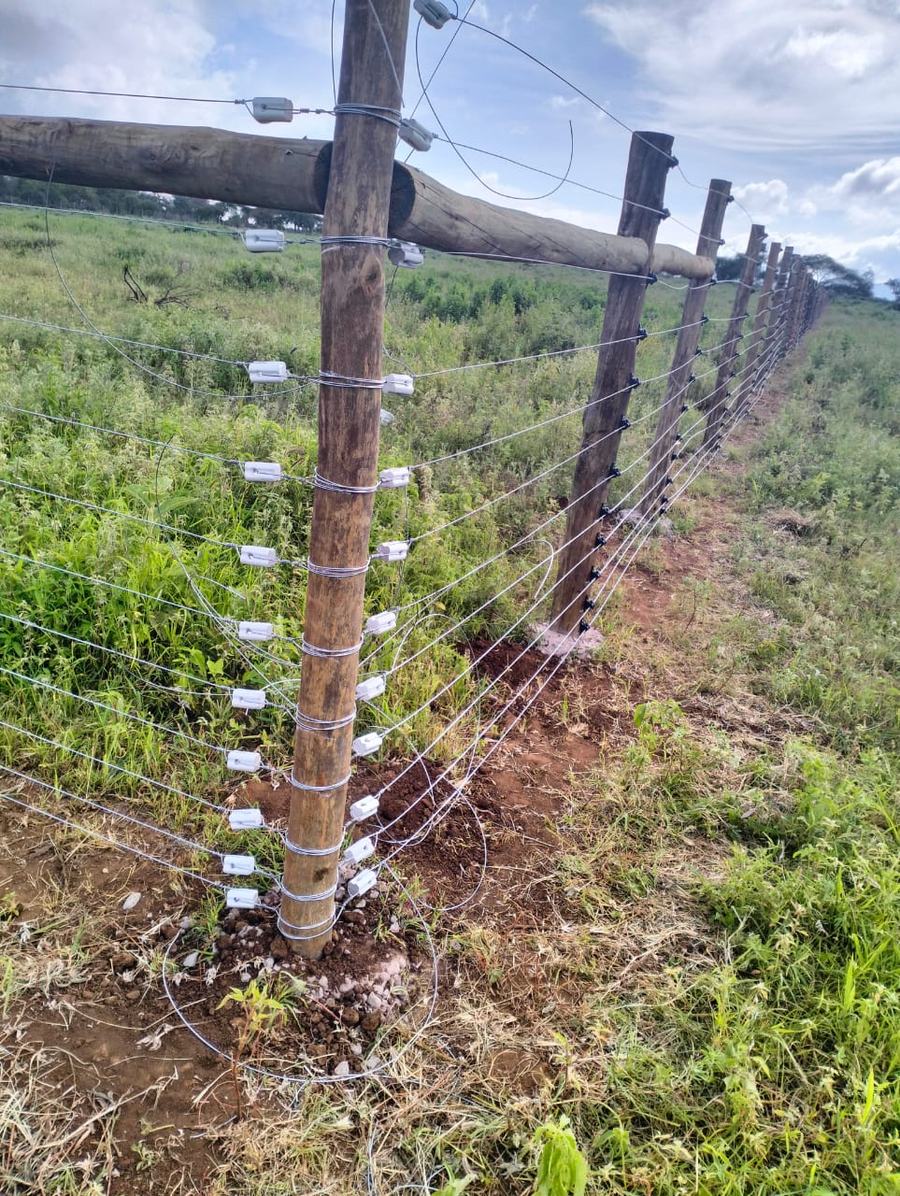
- An electrified perimeter around the first 3.25 acres. Not optional: elephants will clear a crop in a night, and quotations for a fence this size ran $35,000 to $40,000 before labor
- Seed room
- Under construction, for starting seedlings in a controlled environment
Now your support can turn that infrastructure into production. The hard, expensive, invisible part is finished. What is left is the part that grows things.
Fenced against elephants
An electrified perimeter is not decoration out here. Elephants move through this country and will clear a crop in a night, which is why a fence is the first thing a farm needs and the reason quotations for this one ran $35,000–$40,000 before labor.
It is the sort of expense that never appears in a brochure and decides whether anything survives to harvest.
What comes next
Grow more. Plant faster. Teach the next generation.
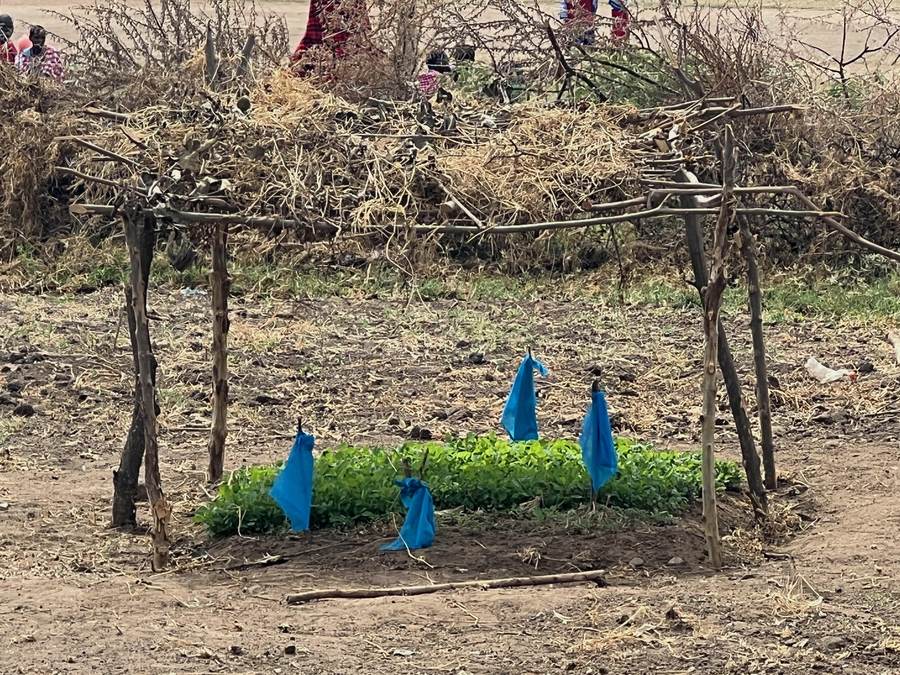
The seed room going up now will let us start plants in a controlled environment, producing seedlings in volume and getting them into the ground faster.
Grow more
The farm grows kale, cabbage, spinach, onions, corn and beans. More seedlings mean more food off the same fenced acres, and a farm that feeds more people from what it already has.
Plant faster
Seedlings started under cover go into the ground stronger and sooner, which means more planting cycles in a year and more chances to sell a surplus.
Teach the next generation
Plants beyond what the farm needs are for the school in Empukani, where children get hands-on experience growing food.
The impact does not stop at the farm
The farm is built to send back what it does not need itself, including seedlings for the school in Empukani, where children get hands-on experience growing food. A child who has grown something once knows it can be done.
That is the quiet reason this project matters more than its acreage suggests. A working farm can also be a place where families learn and children grow. See our education work →
How it is meant to work
Built to sustain itself.
Hope Shamba is designed to pay its own way. What it produces beyond its own needs goes back into the community as food, as work, and as seedlings for families and for the school.
That is the point of a model farm. It is not meant to be funded forever. It is meant to carry itself and then give away what is left over, and to show the families around it that the same thing can be done on their own ground.
There will always be a next thing the farm needs. Those are raised as their own projects rather than as a standing appeal, so this page can stay about the farm.
The biggest need
A tractor.
Every acre at Hope Shamba is currently broken by hired oxen teams, or by a tractor trucked in from a long way off and rented by the day.
Both are expensive, and neither is dependable. Planting waits on somebody else's schedule, in a climate where a week can decide a season.
A tractor of our own ends that. And then it does something considerably more interesting: it leaves the farm.
Maasai families who want to start their own plots have to clear land first, and clearing land by hand or by ox is the wall most of them never get past. A tractor at Hope Shamba can break ground for other farms across the area. That is the difference between one farm and many, and it is the whole point of a model farm.
One tractor, bought outright.
- Ends
- Reliance on hired oxen teams
- Ends
- Renting a tractor trucked in from a distance
- Gains
- Planting on our own schedule, when the rains say so
- Gains
- Land cleared for Maasai families starting their own farms
A single gift covers it. So does a group of them: a church, a family, a handful of donors together.
Why it matters beyond food
A farm pays for more than it grows.
Agriculture accounts for roughly 35% of Kenya's GDP and 40% of its exports. At the village level it does several things at once: access to healthy food, feed that supports livestock through a drought, and paid work where there is very little.
It also reduces what the ministry spends. Food grown at Hope Shamba lowers grocery costs for our programs, which frees money for the church, the clinic and the school, so a gift to the farm quietly funds the rest of the work as well.
Your support for Hope Shamba Farm reduces grocery expenses, saves Mission Maasai funds, and allows us to allocate resources to other important areas.
Pastor Timothy Moilo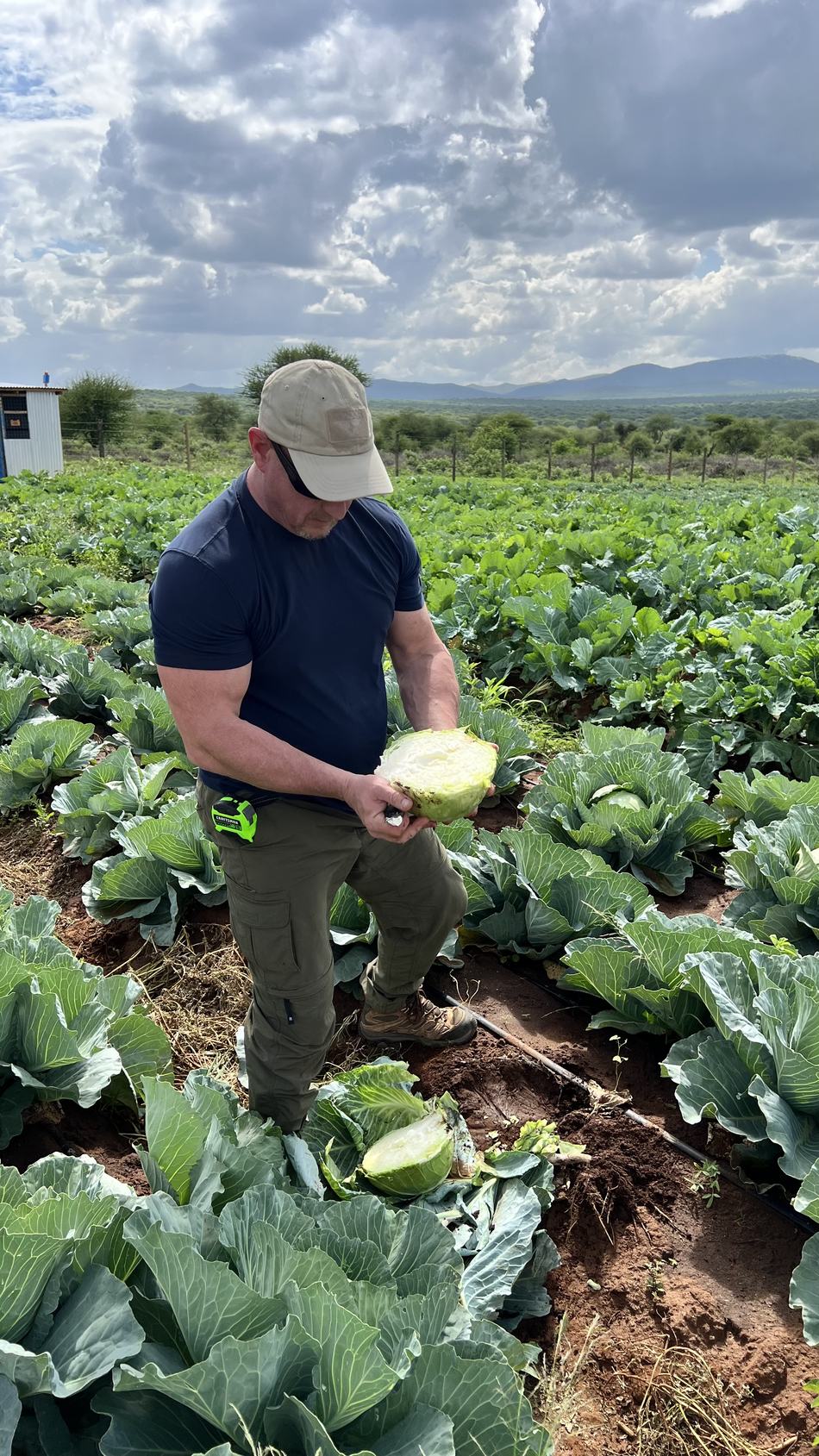
Who is building it
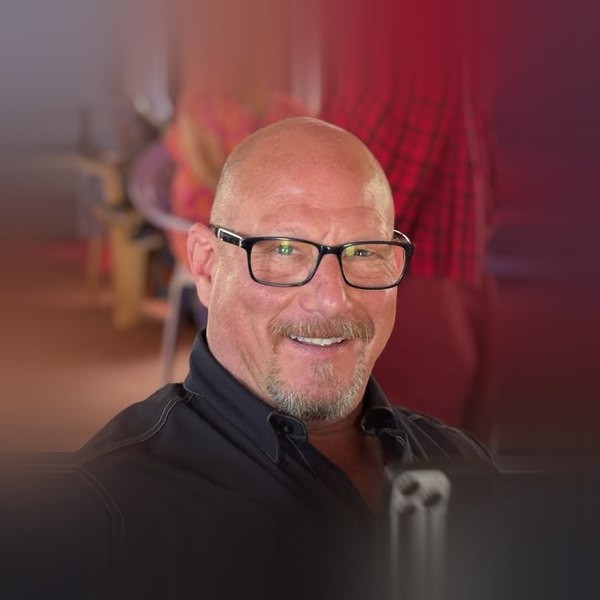
The project team

“See how the farmer waits for the land to yield its valuable crop, patiently waiting for the autumn and spring rains.”
James 5:7
Help us grow what comes next